
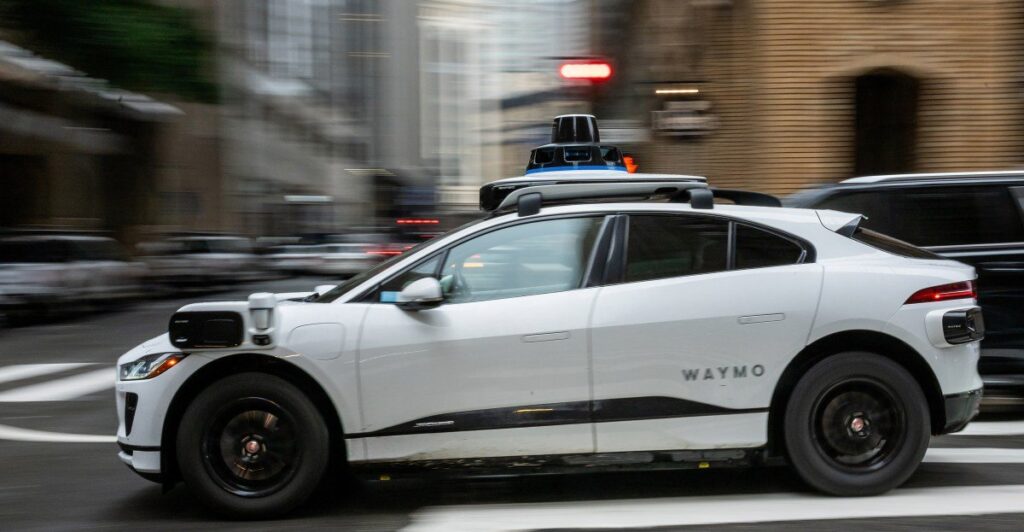
Waymo hits 170 million miles while avoiding serious mayhem
Waymo has announced that its autonomous vehicles have surpassed 170 million miles traveled, boasting a safety record that significantly outperforms human drivers in terms of avoiding serious crashes and injuries. The firm recently updated its safety hub online to include these latest metrics. Despite notable progress, some safety advocates remain critical of how Waymo presents its technology and data to the public, urging for a more nuanced understanding of the overall safety impact.
According to Waymo, as of December 2025, its autonomous fleet, comprising about 3,000 vehicles operating across 10 cities, has collectively driven the equivalent of 200 human lifetimes—assuming a lifetime driving distance of 850,000 miles per individual. The company’s autonomous system, known as the Waymo Driver, which integrates AI, software, and sensor technology, reportedly results in 92 percent fewer crashes causing serious injuries or fatalities, 83 percent fewer crashes triggering airbags, and 82 percent fewer crashes involving any injury, compared to human-operated vehicles. At its current scale, with over 4 million miles driven each week, Waymo estimates that its technology prevents approximately one serious-injury crash every eight days, underscoring its commitment to improving road safety.
However, Waymo’s record is not without incidents. A recent case involved one of its vehicles in Santa Monica striking a child near a school while traveling around 17 mph; the vehicle slowed to approximately 6 mph just before impact, with the child sustaining minor injuries. This incident is under investigation by the National Transportation Safety Board (NTSB). Additionally, the NTSB has initiated inquiries into instances where Waymo vehicles failed to stop for school buses engaged in student loading and unloading in Austin, Texas, prompting a safety recall in late 2025. Other reports mention a Waymo vehicle obstructing an ambulance during a critical emergency, illustrating challenges in emergency responsiveness. These operational shortcomings, particularly in blocking intersections or delaying emergency response, generally do not appear in the federal data Waymo reports, potentially skewing public perception.
Since 2021, a federal general order mandates that manufacturers and tech companies report all collisions involving fully autonomous or advanced driver-assist systems within 30 seconds of impact. Waymo compiles this data into accessible visual presentations via its safety hub, while also submitting findings to peer-reviewed journals for independent validation. Despite this transparency, some experts stress that the company’s portrayal of its safety record may omit crucial context, leading to an overly optimistic interpretation.
The Advocates for Highway and Auto Safety, in correspondence with the Senate Commerce Committee, highlighted concerns based on Waymo’s data submissions. Their analysis revealed that nearly 45 percent of reported wrecks involved empty vehicles, which naturally reduces potential injury claims since no passengers are present. Moreover, about 80 percent of Waymo’s crashes were rear-end collisions—a significantly higher proportion than the national average of about 30 percent—raising questions about the nature of these incidents. The group argues that presenting safety benefits derived from crashes without occupants can mislead the public, especially since autonomous vehicles are intended primarily to transport people.
Waymo responded by referencing its FAQ section, where it acknowledges that some rides occur without passengers onboard. The company emphasizes that it evaluates injuries to all individuals affected, including pedestrians and cyclists, and contends that the absence of passengers alone does not account for the substantial reduction in injury-causing crashes. The company also clarified that airbags deploy even in unoccupied vehicles and that deployments in other involved vehicles are factored into their safety analyses.
Further criticism from safety advocates focuses on Waymo’s mileage milestones, noting that the fleet’s cumulative distance represents a minuscule fraction of the trillions of miles driven annually by human drivers. This limited operational exposure constrains the robustness of safety claims. The group also points to ongoing problems such as Waymo vehicles crossing into prohibited areas like train tracks or ignoring school bus signals as indicators that the technology still requires refinement. As one expert highlighted, while human drivers occasionally make similar errors, hefty investments in autonomous vehicle training should result in better safety performance than the worst human drivers.
In summary, while Waymo’s data showcases significant strides in reducing serious crashes and enhancing safety, ongoing incidents and critical analysis suggest that the technology and its public representation remain works in progress. The dialogue between advocates, regulators, and Waymo underscores the complexities of evaluating autonomous vehicle safety in real-world conditions.
