
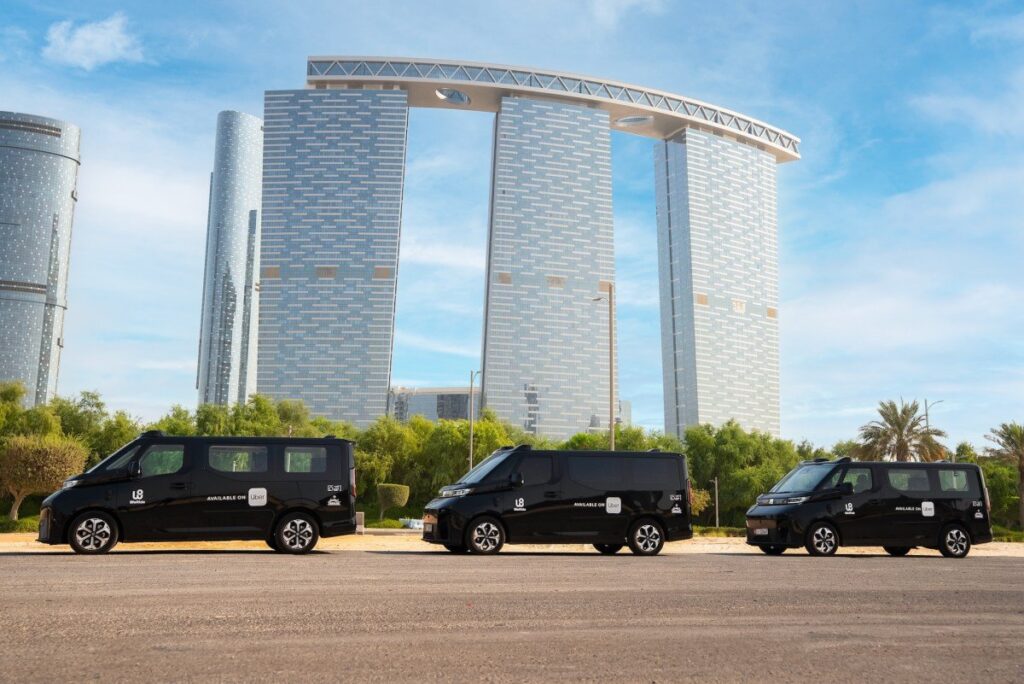
Uber and WeRide’s robotaxi service in Abu Dhabi is officially driverless
A year following the introduction of a commercial robotaxi service in Abu Dhabi, WeRide and Uber have officially transitioned to a fully driverless operation. The service no longer requires a human safety operator behind the wheel and is now open to the public, initially covering routes on Yas Island, a popular tourist destination that hosts the Abu Dhabi Grand Prix Formula 1 racing circuit.
The robotaxi operations in Abu Dhabi resemble Uber’s existing collaboration with another autonomous vehicle company in Austin. Riders using Uber Comfort or UberX options could be paired with a WeRide robotaxi, while those desiring higher chances of riding in a fully autonomous vehicle can opt for a dedicated “Autonomous” choice within the app. The companies are also collaborating with Tawasul, a fleet operator partner, to support this initiative.
This launch came shortly after WeRide obtained a federal permit from the United Arab Emirates, authorizing fully driverless commercial operations. Plans are underway to expand these driverless services to other areas within Abu Dhabi’s city center, marking what Uber describes as a significant transportation milestone—the first deployment of a fully autonomous vehicle outside the United States and China.
Over the past two years, Uber has forged partnerships with roughly 20 autonomous vehicle technology firms spanning the United States, Europe, and the Middle East. These agreements extend beyond robotaxis to include various self-driving applications such as delivery and trucking. In 2024 alone, Uber announced collaborations with companies from different regions and sectors, covering robotaxi and autonomous vehicle services with brands like May Mobility, Volkswagen, Momenta, Pony.ai, Baidu, and a premium robotaxi service using Lucid Gravity SUVs equipped with technology from a San Francisco-based startup.
These partnerships are beginning to materialize into tangible commercial services, such as the early-year launch of a robotaxi service in Austin, and the recent expansion into the Middle East through WeRide’s operations in Abu Dhabi, with further plans for growth in cities like Dubai. Uber’s CEO has projected that by the end of 2026, autonomous vehicle deployments will be active on the Uber platform in at least ten cities.
Furthermore, WeRide and Uber have revealed ambitions to extend their driverless fleet across 15 cities throughout the Middle East and Europe, ultimately scaling to thousands of robotaxis. This expansion would mark a substantial increase from WeRide’s current operation of over 150 robotaxis in the region.
