
Schematik Is ‘Cursor for Hardware.’ Anthropic Wants In
Samuel Beek realized he had a significant issue when every fuse in his house blew. The problem stemmed from an electric door opener he had constructed himself, following wiring and assembly instructions generated by ChatGPT. Unfortunately, the AI failed to properly distinguish between wet and dry connections, resulting in a power surge that damaged everything else connected. This experience led to an important lesson for Beek, who admits he isn’t an expert in hardware but wanted to build something safe and reliable.
Beek emphasizes the difference between having your fuses blow and creating a solid, functional product. This mishap inspired him to build AI systems that have a deep and accurate understanding of hardware fundamentals. He then shifted his development efforts to Anthropic’s Claude and transformed it into an assistant called Schematik, which he frequently describes as a “Cursor for Hardware.”
The concept behind Schematik is essentially writing code but for physical devices. By describing what you want to build, the program recommends almost everything needed, including specific components with purchase links. It then guides users through the assembly process. Beek is working towards monetizing this tool and gaining investment support, recently securing $4.6 million from Lightspeed Venture Partners. However, the tool is already available for anyone to use.
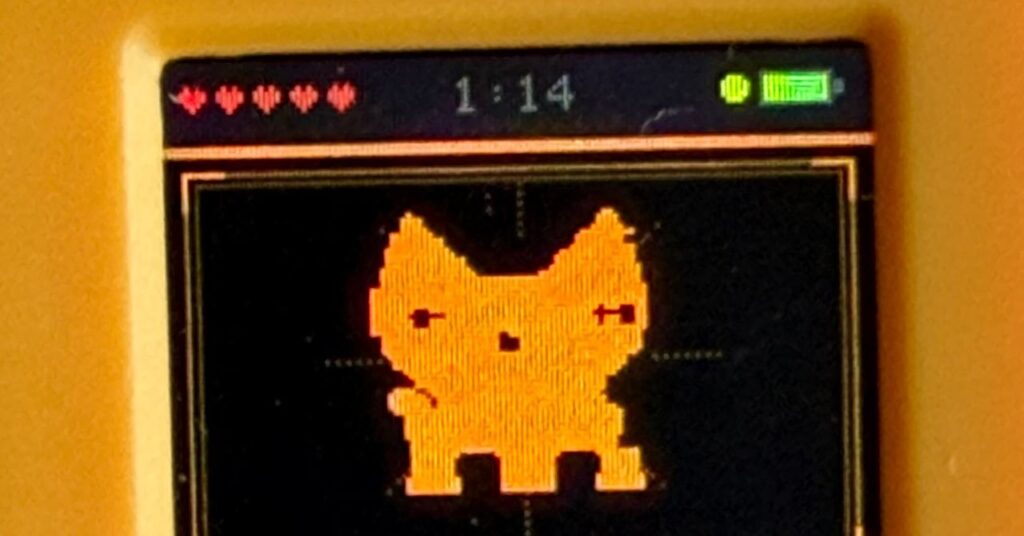
When Beek introduced the idea on X in February, it quickly gained attention. Enthusiasts tried describing their desired builds and successfully creating devices. Marc Vermeeren from N8N, a European AI company, has built multiple items ranging from an MP3 player to a Tamagotchi-like bot named Clawy, designed to assist with Claude coding sessions. Some have taken creative liberties, crafting Clawy versions resembling characters such as Paulie Walnuts from The Sopranos.
Vermeeren highlights that with Schematik, nothing hinders creativity anymore, which fuels his ongoing enthusiasm for building. He has also become an investor in the project. Similarly, Anthropic engineer Felix Rieseberg announced on X that Anthropic now offers a Bluetooth API for makers and developers, enabling hardware devices to interact with Claude. While Rieseberg shared an image and GitHub link for a device akin to Vermeeren’s Clawy, neither he nor Anthropic commented on any direct inspiration from Beek or Vermeeren’s work.
Vermeeren expressed pride in inspiring others through his creations and would feel even greater pride if Anthropic’s feature developed as a result of those innovations. Currently, nearly every AI tech company is exploring hardware devices, spanning large corporations like OpenAI and major chip producers to companies specializing in niche wearables. Additionally, there’s a longstanding community of tinkerers and makers transforming products in creative ways, from converting vapes into synthesizers to developing resistance gadgets.
Beek identifies hardware creation as a heavily gatekept domain where very few can excel. His hope is that Schematik will democratize this field, allowing more people to build and learn about hardware. While software vibe coding has faced criticism due to vulnerabilities and instability, Beek argues that hardware has a fundamental advantage since electronics obey physical laws that can be verified and tested.
Safety remains a priority, and Schematik currently supports only low-voltage devices—no more than three to five volts—which suffices for internet of things gadgets or devices like music players. Though Beek ultimately envisions creating humanoid robots, his immediate focus is safely enabling makers. Kyle Wiens, CEO of iFixit, sees promise in Schematik despite not having used it, noting the immense complexity in electronics design and the difficulty of ensuring component compatibility, challenges that AI is well-suited to tackle.
Beek reflects on how software development has transformed rapidly over the past five years, becoming easier and faster, whereas hardware development has seen little advancement, remaining largely unchanged over decades. He believes integrating AI into hardware design is the promising path forward, potentially opening new doors for innovation and accessibility.
