
Motional puts AI at center of robotaxi reboot as it targets 2026 for driverless service
Nearly two years ago, Motional faced a critical juncture in its journey toward autonomous vehicle development. Originating from a substantial joint venture between Hyundai Motor Group and Aptiv, the company had missed a crucial deadline for launching a driverless robotaxi service in partnership with Lyft. The withdrawal of Aptiv as a financial supporter necessitated an additional $1 billion investment from Hyundai to keep the venture alive. This period also saw significant reductions in the workforce, with layoffs cutting down its headcount from approximately 1,400 employees to fewer than 600 following a major restructuring in May 2024. Meanwhile, rapid advancements in artificial intelligence were reshaping the engineering strategies underpinning autonomous driving technologies.
Faced with these challenges, Motional chose to pivot decisively rather than falter. The company halted its previous activities and embraced an AI-first methodology for its self-driving systems, announcing plans to launch a commercial driverless taxi service in Las Vegas by the end of 2026. Already, it has introduced a robotaxi service with human safety operators behind the wheel, initially available to its staff. Plans are underway to extend this service to the public later this year in collaboration with an unnamed ride-hailing partner, leveraging existing connections with Lyft and Uber. By year-end, Motional aims to remove human safety operators entirely, shifting to fully operational autonomous rides.
According to Motional’s president and CEO, Laura Major, the company recognized the vast potential brought by AI advancements and the need for a system that is not only safe but also cost-effective and scalable across global markets. This realization prompted a temporary pause in commercial progress in order to accelerate development through innovation. The shift involved moving away from a traditional robotics-based approach to one grounded in AI foundation models. Previously, the company had used discrete machine learning models for different functions like perception and tracking, combined with rule-based programming, creating a complex software ecosystem. However, new AI techniques, initially designed for language processing and exemplified by developments like transformer architectures, opened avenues for integrating these models into a unified system applicable to autonomous driving.
Motional embarked on merging its various machine learning components into a singular backbone system that allows end-to-end operation while still maintaining smaller models for development flexibility. This hybrid approach is critical for adapting the technology to different urban environments and ensuring cost efficiency. For instance, it enables the system to handle city-to-city differences—such as varied traffic signal setups—without needing to overhaul the entire software, merely requiring data collection and model retraining to maintain safe operation.
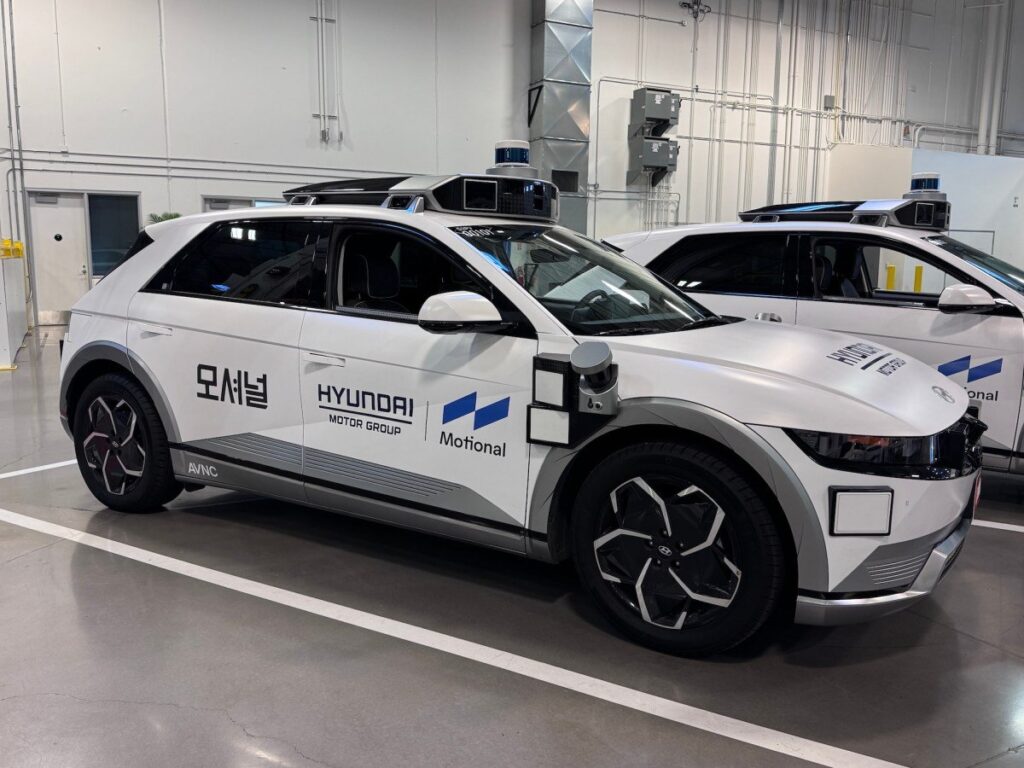
A firsthand demonstration of Motional’s enhanced system during a 30-minute autonomous drive in Las Vegas showcased significant improvements in navigating complex and crowded urban settings. The Hyundai Ioniq 5 vehicle maneuvered carefully through bustling hotel pickup areas and parking facilities, areas historically difficult for autonomous vehicles, without human intervention except for monitoring. Compared to previous operations where a safety driver would manually handle these challenging zones, the new system showed promising autonomy, although it still exercised caution, especially when encountering double-parked vehicles. The onboard user interface also remains a work in progress.
Despite some areas requiring further refinement, Major asserts that Motional is on track to deliver a safe, affordable, and scalable commercial service. Hyundai, as the principal stakeholder, remains committed to the long-term vision of deploying Level 4 autonomy—where vehicles fully manage driving without human involvement—not only in robotaxis, which represent the initial milestone, but eventually integrated into personal vehicles. This strategy positions Motional to make substantial contributions to the future of autonomous transportation, beginning with robotaxi operations and expanding toward broader adoption in consumer automobiles.
