
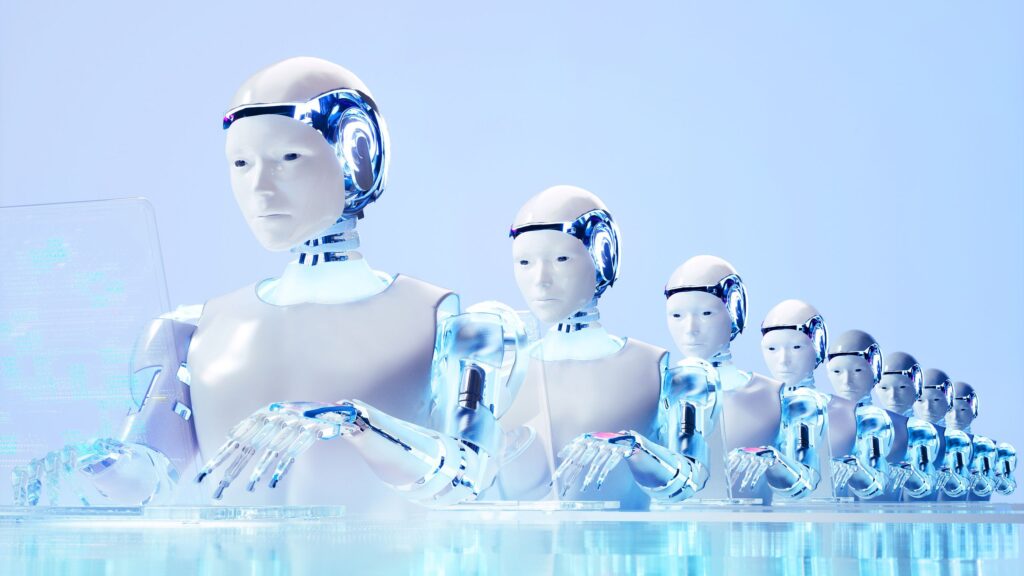
Japan reveals new Noetra plan to flood the country with 10 million robots by 2040, including work in the nursing, food and drink sectors
Japan has launched an updated national robotics initiative with the ambition of introducing roughly 10 million robots across the country by 2040. The expanded strategy, announced by Economy, Trade and Industry Minister Ryosei Akazawa, now covers 18 sectors, having added food manufacturing and healthcare to the list of priority fields. Central to this plan is the rapid establishment of a core AI robotics hub aimed at facilitating widespread adoption, research, and workforce training related to robotics nationwide.
This hub is intended to be a vital mechanism enabling businesses to integrate robots on a large scale, addressing acute labor shortages in various industries. The initiative focuses on Noetra, a domestically developed multimodal AI foundation model created in conjunction with a National Institute of Advanced Industrial Science and Technology project dedicated to physical AI. Noetra is mainly owned by SoftBank, NEC, Sony Group, and Honda, while Fujitsu and Rakuten are reportedly considering joining the consortium.
Minister Akazawa highlighted that the government’s confidence stems from leveraging extensive data accumulated from elderly care, disaster response, manufacturing operations, and the Fukushima Daiichi nuclear decommissioning effort. He framed Japan’s edge in this global contest as a function of rich, accessible datasets rather than sheer computational capacity. Accordingly, the government aims to develop data infrastructure for physical AI and robotics that aligns with Japan’s industrial expertise, capitalizing on decades of experience in operating machinery in hazardous and labor-short environments.
The strategy also involves international collaboration, with research partnerships confirmed in the US, Canada, France, and the UK to support the foundation model’s development. The resulting technology will be accessible to Japanese AI developers, enterprises, and users across diverse sectors and regions. Some companies are expected to leverage this platform to expand into overseas markets in the longer term. Additionally, the minister tied the robotics plan to broader goals of fostering AI-driven growth originating from Japan’s regional areas, countering the concentration of development in Tokyo.
Japan’s aging population and stringent migration policies continue to create labor shortages across multiple industries, prompting policymakers to view automation as a viable solution to unfilled vacancies. Advocates argue that robots will perform roles unavailable to human workers rather than outright replacing personnel. Consequently, the revised strategy includes responsibilities spanning from medical care to food and beverage production nationwide. South Korea’s announcement of a similar robotics goal adds a competitive regional dynamic as both countries advance sovereign AI capabilities. Realizing these ambitions will depend on sustained investment, technological innovation, and societal acceptance in Japan.
