
Inside Rivian’s big bet on AI-powered self-driving
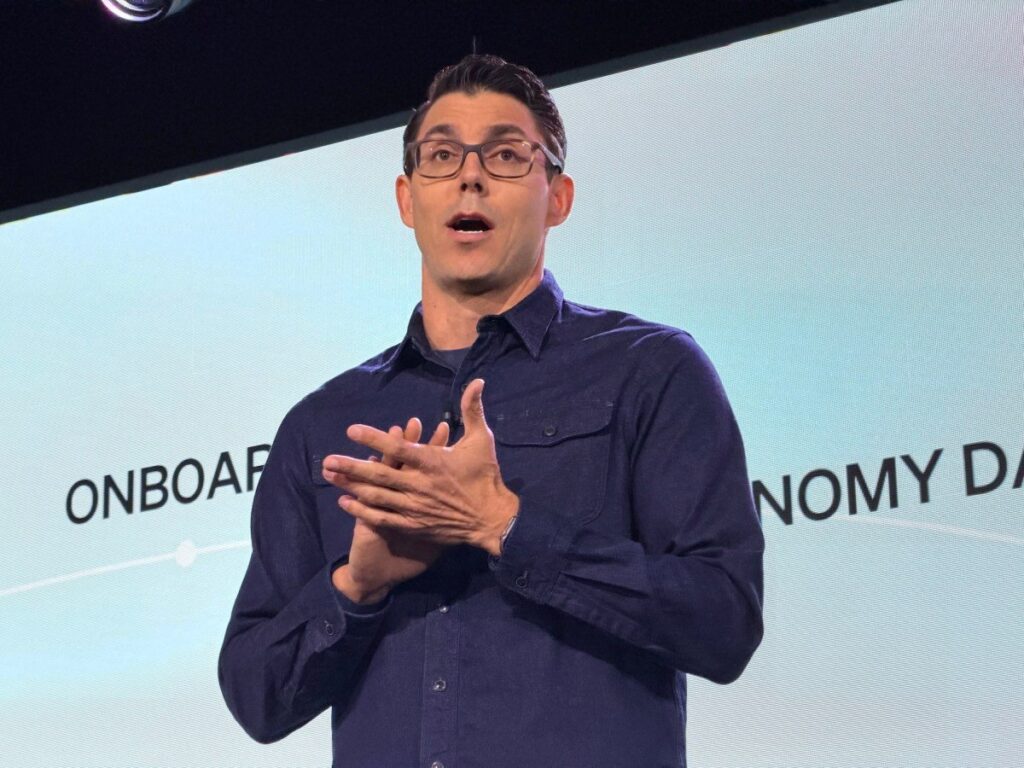
In Rivian’s Palo Alto office cafeteria, an autonomous robot initially navigated smoothly past chilled canned coffee shelves but soon got stuck, needing a man’s assistance while its screen displayed the message “I’m stuck.” This small incident set the stage for Rivian’s “Autonomy & AI Day,” an event highlighting the company’s ambition to develop vehicles capable of self-driving. Although Rivian didn’t manufacture the robot or control its functionality, its difficulties provided a reminder of the complexity involved in autonomous technology.
Later the same day, I experienced a 15-minute demonstration ride in a 2025 R1S SUV running Rivian’s new “Large Driving Model.” The electric vehicle, equipped with self-driving software, followed a winding route near the company’s campus. During the ride, when a Tesla Model S slowed abruptly to enter its lot, the Rivian SUV promptly detected the vehicle and braked sharply, narrowly avoiding the need for manual intervention. The ride experienced one actual disengagement when a tree-trimming zone reduced road width; the driver took control momentarily. Such disengagements occurred in several other demonstration rides, highlighting the current immaturity of the software.
Despite these hiccups, the overall performance was promising considering the software is not production-ready. Rivian has abandoned its old rule-based system, opting for an end-to-end AI-driven approach reminiscent of Tesla’s Full Self-Driving methodology. The new system autonomously stopped at lights, navigated turns, and slowed for speed bumps without explicit programming for these scenarios. CEO RJ Scaringe explained that in 2021, seeing the rise of transformer-based AI, the company reshaped its team and started anew with an AI-centric autonomy platform. This ground-up software, launched in 2024 on second-generation R1 models using Nvidia Orin processors, began showing significant progress only after substantial data collection.
Rivian is placing its hopes on training its Large Driving Model with fleet data swiftly enough to roll out a “Universal Hands-Free” feature later this month. This update will enable drivers to remove hands from the wheel across 3.5 million miles of U.S. and Canadian roads, provided lane markings are present. By late 2026, the company plans to enable full point-to-point driving for consumers, mimicking the current demonstration experience. Meanwhile, the smaller and more affordable R2 SUVs, launching by the end of 2026, will transition from Nvidia chips to a newly unveiled custom autonomy computer paired with lidar sensors. This hardware upgrade aims to enable drivers to take their eyes off the road, though truly hands- and eyes-off autonomy remains farther out, contingent on how quickly the Large Driving Model matures.
This phased rollout introduces timing challenges for Rivian. The advanced autonomy computer and lidar won’t be available until months after the R2’s release, meaning early R2 buyers won’t immediately access eyes-off driving capabilities. Nonetheless, the R2 is a critical product, especially amid declining sales of earlier models. Scaringe acknowledged that rapid technology advancement causes inevitable obsolescence and that transparency with customers is crucial. Early R2 purchasers will receive hands-off but not fully eyes-off software, with some customers likely choosing to wait for the full upgrade, while others may buy now and upgrade later. The company believes sufficient demand allows customers to make these informed decisions despite misaligned timelines between vehicle production and autonomy features.
Reflecting on an interview from 2018, Scaringe recalled his goal for Rivian vehicles to be autonomous enough that after hiking from one point to another, your vehicle would meet you at the trail’s end. While that aspiration seemed ambitious years ago, it remains aligned with Rivian’s adventurous spirit. Scaringe continues to believe such use cases could materialize within several years, though only after the more capable R2 vehicles are tested and deployed. Fully autonomous navigation in complex environments like dirt roads or off-road trails is within reach, although extreme off-road maneuvers such as rock crawling remain outside the company’s focus. The priority is enabling vehicles to reliably reach trailheads autonomously rather than tackling highly technical terrain. Rivian’s “Universal Hands-Free” update is set to arrive later this month, marking an important step in this evolving journey.
