
Inside Microsoft’s big Copilot rethink
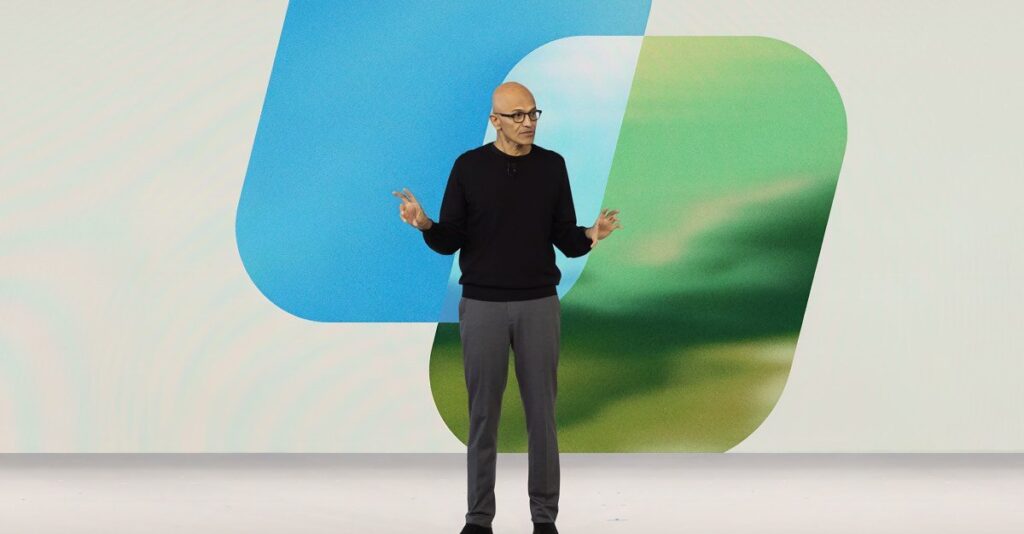
Last week, Microsoft CEO Satya Nadella gathered a select group of leaders from major enterprise customers at a private event, choosing to present the future direction of Copilot in a more intimate setting rather than a public media spectacle. He described Copilot’s evolving role as the “OS for work,” signifying a transformative approach to workplace AI integration. Microsoft is integrating advanced coding and agent features into Copilot, alongside the complete Microsoft Office suite for the first time, aiming to revolutionize how people perform work tasks, much like how Office reshaped productivity in previous decades.
Nadella reflected on the shift from old-fashioned business tools like memos and faxes to using Excel spreadsheets, emphasizing that Microsoft is pioneering the next frontier with AI-powered capabilities. The company has been uniting the consumer and enterprise versions of Copilot into a cohesive interface designed to make Copilot as indispensable as Office once was. This new design marks a clear departure from the initial consumer-focused design influenced by Inflection AI’s Pi assistant, moving toward a sturdier enterprise aesthetic with distinct areas for chat, coding, and a new AI agent called Autopilot.
Jacob Andreou, the head of Copilot, highlighted the importance of merging consumer-grade user experiences into workplace software, acknowledging the heightened standards users bring from their personal technology use. Having taken charge of Copilot’s entire product and growth efforts, Andreou has overseen a challenging redesign process marked by internal tension between his team and the Cap team led by Charles Lamanna, which focuses on agents and platforms. Microsoft’s earlier Scout project, previewed during the Build conference, has since been retired in favor of the cloud-based, rebranded Autopilot following trademark considerations and a shift toward a more professional, less whimsical branding.
The company is addressing security concerns around AI autonomy, with Nadella emphasizing organizational control as AI agents inherently learn from interactions. Andreou noted the difficulty enterprises have had integrating autonomous agents due to their unpredictability, which presents both strengths and risks from an IT management perspective. Microsoft positions its “OS for work” as a business-centric solution, deliberately leaving consumer-focused AI ecosystems to competitors like Meta and OpenAI, though Andreou hasn’t ruled out enhancing Copilot for individual consumers who invest personally in tools like PowerPoint and Excel.
By embedding Office directly into Copilot, users will soon be able to create and modify documents within the assistant itself without switching to separate apps, offering a full ribbon interface resembling the web version of Office. This initiative signals Microsoft’s anticipation of a future where AI handles many document creation tasks previously dependent on Office applications. Nadella sees Copilot as the platform defining this new AI-driven work era rather than just adding features into standalone Office products, aiming to drive structural changes in how organizations operate and pay for software.
Microsoft also unveiled several hardware and software updates. It refreshed the smaller Surface Pro and Surface Laptop models with higher-performing Qualcomm Snapdragon X2 Plus chips and reintroduced a black color option, though pricing has increased. A new Surface Mouse was introduced, featuring haptic feedback and a customizable action button, marking the first update in a decade. Additionally, Microsoft announced Ink Canvas, an AI-powered digital sketchpad app debuting alongside the new Surface Pro, supporting drawing, AI image generation, and summarization, expanding the company’s digital creativity tools.
In organizational changes, Brad Smith assumed leadership over communications, moving the group under the Corporate, External, and Legal Affairs wing as Microsoft shifts its PR style to more closely align with AI startups, encouraging product experts to lead storytelling. Meanwhile, cofounder Bill Gates publicly called for AI regulation, warning of the technology’s potential destructive power. Microsoft quietly retired the “Copilot Plus PC” brand despite new eligible Surface devices, with speculation about a forthcoming rebranding at an upcoming Windows event.
Reports have emerged that human contractors review prompts and images submitted to Microsoft Copilot, revealing exposure to troubling and possibly illegal content, raising privacy and ethical concerns. On the gaming front, Xbox introduced Mythic Achievements, similar to PlayStation’s Platinum trophies, and recently rolled out Windows 11’s 26H2 update, described as a minor upgrade incorporating features from previous releases. Gears of War: E-Day launched to critical praise alongside a themed pizza cutter that sold out rapidly. Amid speculation about Xbox’s future, CEO Asha Sharma firmly denied any plans to sell the division, outlining ongoing strategic shifts including studio consolidations and moves to make Xbox a wholly owned subsidiary within Microsoft.
The journalist hints at attending Microsoft’s upcoming Windows and Surface event and invites readers to engage via email or messaging platforms to discuss these developments or share insights about Microsoft’s secret projects.
