
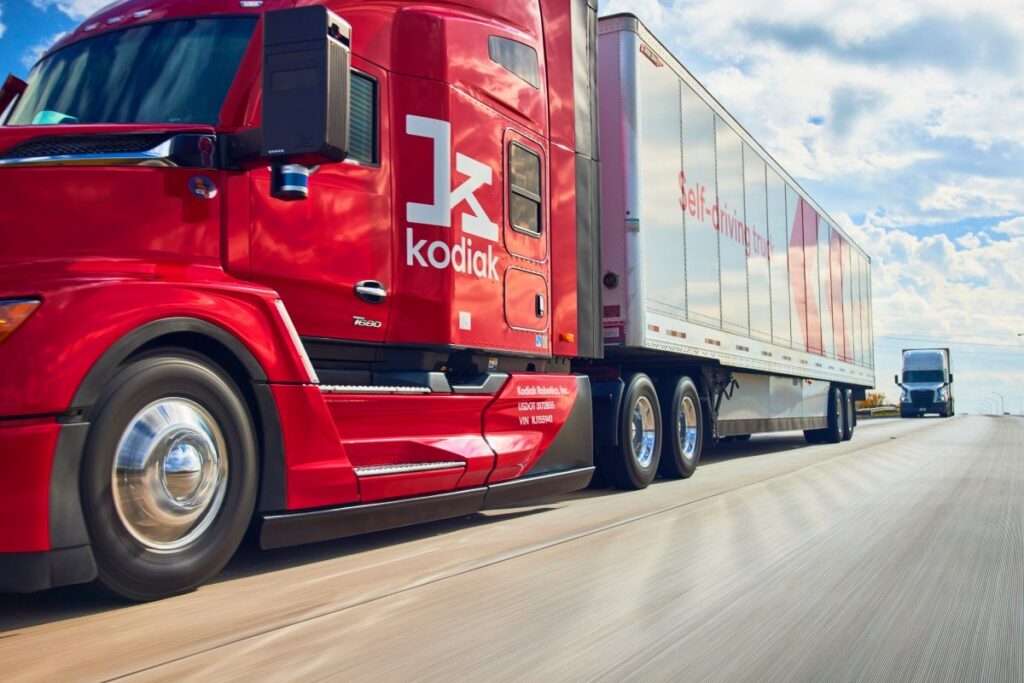
California’s ban on self-driving trucks could soon be over
California regulators have introduced updated rules that would enable companies to test and ultimately deploy self-driving trucks on public highways across the state. The California Department of Motor Vehicles, the body responsible for overseeing autonomous vehicle regulation, has opened a 15-day public comment period on these revisions, which will conclude on December 18. While California hosts a multitude of companies engaged in developing and testing autonomous vehicle technologies, the presence of self-driving trucks on public roads has been nonexistent due to existing regulations prohibiting driverless vehicles weighing over 10,000 pounds from road testing. Having deliberated on lifting this ban for several years, the agency presented a draft of the proposed changes earlier this year, with the final version now released for public review.
The proposed revisions encompass several facets beyond the introduction of self-driving trucks, including clauses that appear to grant law enforcement the authority to issue traffic citations to autonomous vehicles—a matter that has gained prominence amid the expansion of commercial robotaxi services in the state. However, the segment addressing self-driving trucks remains the most debated. The updated rules reflect input gathered from public feedback received during the initial comment period earlier this year. Companies involved in autonomous vehicle development, particularly those based in California but conducting testing in states such as Texas, have welcomed the proposal. Firms like Aurora Innovation and Kodiak AI envision utilizing autonomous trucks to transport freight across major interstate commercial routes.
Daniel Goff, vice president of external affairs at Kodiak AI, expressed optimism, stating that the latest draft regulations signify substantial progress toward establishing a regulatory framework supportive of driverless trucks and facilitating coast-to-coast autonomous freight operations. He emphasized the importance of these measures as a critical step toward enabling autonomous trucks to operate on California freeways by 2026, a development expected to improve road safety and contribute economic growth. Despite this enthusiasm, the Teamsters Union remains steadfast in its opposition. Shane Gusman, legislative director for Teamsters California, confirmed the union’s persistent resistance to deploying and testing autonomous truck technology on public roads and announced plans to challenge the proposed changes. The union is also lobbying for the passage of AB 33, a bill designed to mandate the presence of a human safety operator in all heavy-duty autonomous trucks.
The revised DMV rules propose a phased permitting process for self-driving truck companies, paralleling the existing protocols for light-duty autonomous vehicles such as robotaxis. Initially, companies would be allowed to conduct testing with a human safety operator onboard. Distinct permits would be necessary for driverless testing and full deployment. The regulations stipulate minimum testing mileages prior to qualifying for driverless permits, requiring, for example, a total of 500,000 autonomous test miles with at least 100,000 miles completed within California’s designated operational domain. Additionally, the DMV suggests updating regulations for light-duty autonomous vehicles by increasing the frequency and detail of data reporting during testing and deployment phases and necessitating more regular plan updates for interactions with emergency responders to enhance public safety and oversight.
