
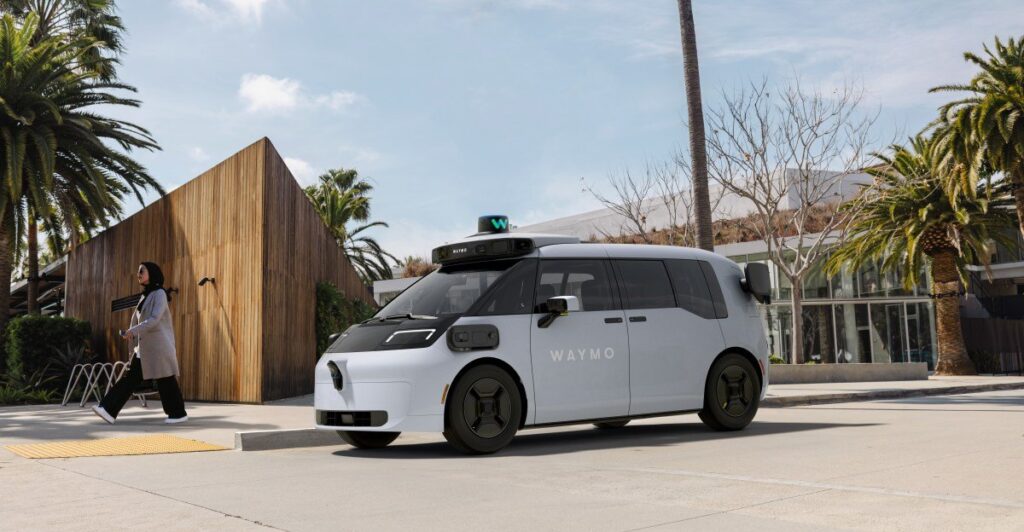
Waymo’s next-gen robotaxi is ready for passengers — and also ‘high-volume production’
After extensive testing and refinement, Waymo has officially declared its sixth-generation robotaxi technology ready to transport passengers. Initially, this advanced autonomous driving system will be introduced for employee use and their acquaintances in San Francisco and Los Angeles before expanding to public customers. This latest iteration signifies not only technological advancement but also a strategic move to enhance production capabilities.
Waymo has positioned its new system to accommodate high-volume manufacturing, allowing for the production of tens of thousands of vehicles annually. This marks a pivotal step as the company intends to maintain its leadership in the robotaxi sector by scaling operations faster and planning to enter roughly 20 additional cities by 2026. Unlike the previous fleet featuring Jaguar I-Pace vehicles that used fifth-generation technology, discontinued due to Jaguar ceasing production, the new setup is designed for multi-vehicle compatibility, starting with the Zeekr RT minivan, rebranded as Ojai, and the Hyundai Ioniq 5, with ongoing discussions involving other major automakers like Toyota.
The sixth-generation system is described as Waymo’s smartest and most capable platform so far, incorporating fewer, yet more sophisticated sensors to reduce cost without sacrificing safety or performance. Its sensor array enhances vision and environmental awareness through powerful 17-megapixel cameras, reengineered lidar sensors that excel in extreme weather conditions, and improved radar systems. The system also includes novel external audio receivers to detect sounds such as sirens and approaching trains. This multi-modal approach ensures robust redundancy, allowing the vehicle to detect and respond to difficult-to-spot hazards, thus enhancing the overall safety mechanism.
Waymo’s VP of engineering emphasized that extensive real-world experience and over 200 million testing miles across more than 10 major cities have validated the system’s readiness. The deployment strategy underlines a comprehensive understanding of diverse environments, including those with challenging weather conditions like heavy winter snow. Importantly, the new camera system achieves higher resolution with fewer units—16 cameras down from the previous 29—delivering sharper images and conserving resources.
Cost reduction and high-volume production are critical components of Waymo’s strategy for expansion both domestically and internationally, aiming to solidify its dominance in the autonomous vehicle market. Although the company plans to add 2,000 vehicles in 2026, bringing the total fleet to 3,500, their broader vision aims for tens of thousands of units over time. This scaling is essential as the wider autonomous vehicle industry faces pressure to expand efficiently into new markets while managing operational costs.
Financially, while Waymo’s parent group reported declining revenue and increasing losses in the latest quarter, the company has bolstered its growth prospects by securing a substantial $16 billion funding round to support global ambitions. This influx of capital underscores Waymo’s commitment to overcoming scaling challenges and expanding its footprint as a leading autonomous vehicle provider worldwide.
